
Marie de France

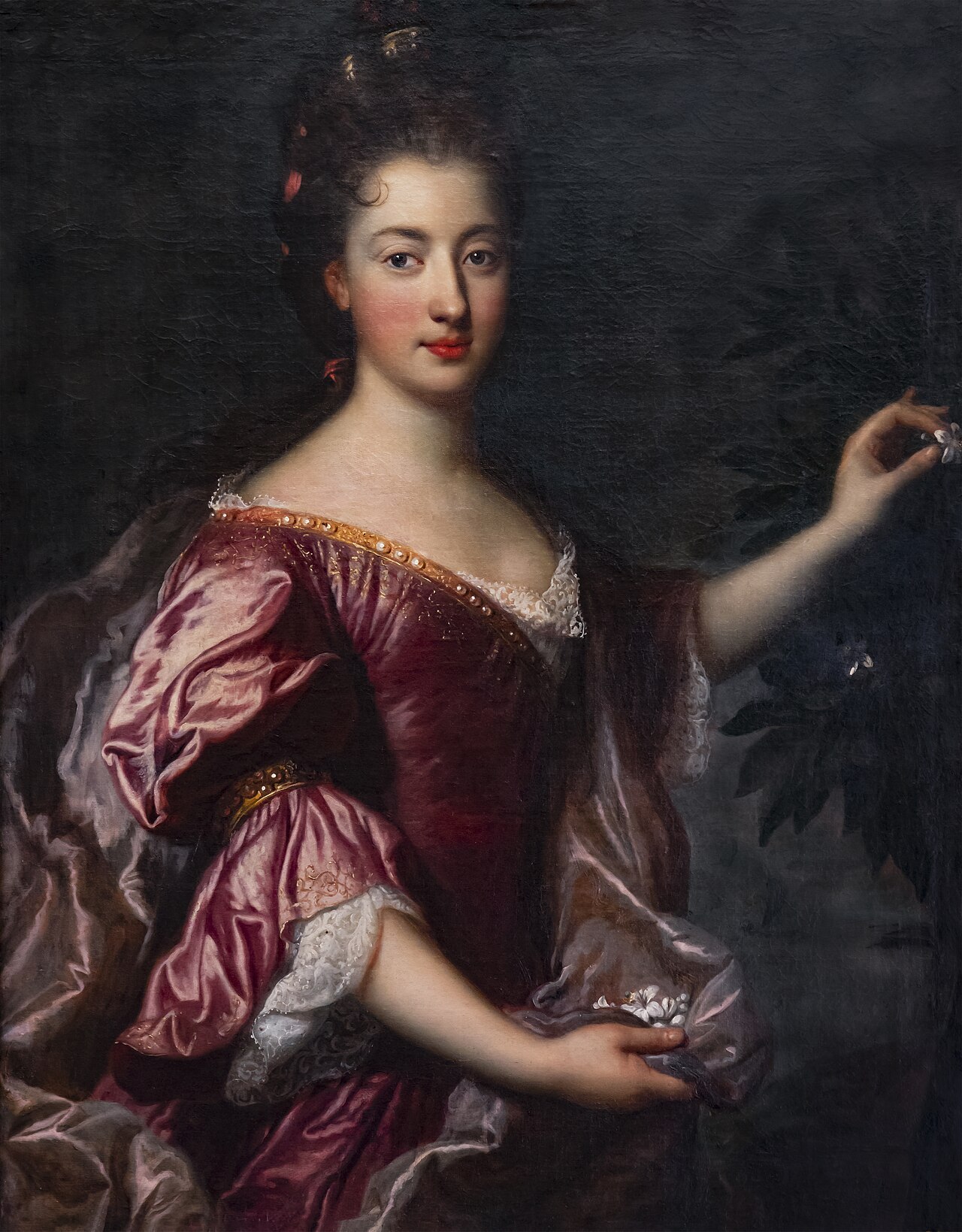
Didier Descouens · CC BY-SA 4.0
Marie de France (fl. She is considered by scholars to be the first woman known to write francophone verse. Virtually nothing is known of her life; both her given name and its geographical specification come from manuscripts containing her works. She lived and wrote at an unknown court, but she and her work were almost certainly known at the royal court of King Henry II of England.
- known_for
- Lais of Marie de France, translation of Aesop's Fables, Espurgatoire seint Partiz
- language
- Old French (possibly Anglo-Norman), Latin
Lore & Background
Marie de France wrote in Old French, possibly the Anglo-Norman variety. She was proficient in Latin, as were most authors and scholars of that era. She is the author of the Lais of Marie de France, a collection of twelve narrative poems. She translated Aesop's Fables from a Latin source into Anglo-Norman French and wrote Espurgatoire seint Partiz, Legend of the Purgatory of St. Patrick, based upon a Latin text. A saint's life, The Life of Saint Audrey, has been tentatively attributed to her, but this identification is not widely accepted. The actual name of the author now known as Marie de France is unknown; she has acquired this nom de plume from a line in one of her published works: 'Marie ai num, si sui de France,' which translates as 'My name is Marie, and I am from France.' Some of the most commonly proposed suggestions for her identity include Marie of France, Countess of Champagne; Marie, Abbess of Shaftesbury and half-sister to Henry II; Marie, Abbess of Reading; Marie I of Boulogne; Marie, Abbess of Barking; and Marie de Meulan. Based on evidence from her writings, it is clear that, despite being born in France, she spent much of her life living in England. It is probable that the Lais were written in the late 12th century; they are dedicated to a 'noble king', usually assumed to be Henry II of England or possibly his eldest son, Henry the Young King. Another of her works, the Fables, is dedicated to a 'Count William', who may have been either William of Mandeville or William Marshall, or possibly William Longsword. It is likely that Marie de France was known at the court of King Henry II and his wife, Eleanor of Aquitaine.
Reader's Guide
Marie de France is significant as the first known woman to write francophone verse, and her Lais were and still are widely read, influencing the subsequent development of the romance/heroic literature genre. Her works—the Lais, the Ysopet fables, the Espurgatoire seint Partiz, and possibly The Life of Saint Audrey—demonstrate her multilingual education and aristocratic or religious background. The Lais, based on Breton or Celtic legends, introduced a new genre of narrative lai in Anglo-Norman verse, often describing courtly love, loss, adventure, and supernatural elements. The precise dialect of Old French she used remains debated, with scholars identifying mixtures of Norman, Anglo-Norman, and Francien elements. Her legacy endures as a foundational figure in medieval French literature, though many details of her life remain unknown.
Did You Know?
- Marie de France is the first woman known to write francophone verse.
- She translated Aesop's Fables from a Latin source into Anglo-Norman French.
Roots and Academic Formation
Lotus Vingadassamy-Engel entered the world on 17 December 1946 in Basse-Terre, on the island of Guadeloupe, into a family that carried both Tamil Hindu heritage and Guadeloupean roots. Her birth name was Geneviève Yolande Marie Hoareau. This dual cultural inheritance would shape her entire intellectual and artistic trajectory. She went on to earn her doctorate from the University of California, San Diego, a credential that positioned her at the intersection of Francophone studies and diaspora scholarship. By 1981 she had settled in metropolitan France, where she took up teaching positions at both secondary schools and universities. Her academic specialty centered on eighteenth-century French literature, a field in which she built a career as a professor. The move from the Caribbean to mainland France did not sever her connection to her Tamil-Guadeloupean identity; rather, it provided the institutional platform from which she would later articulate that identity to wider audiences. Her professional life thus became a bridge between the academy and the creative arts, between the Caribbean and the Indian diaspora.
The Diaspora Lecture and Its Aftermath
In December 1991, Vingadassamy-Engel delivered a lecture at the India International Centre in New Delhi titled "The Hindu Diaspora in the French West Indies." The talk examined the lasting consequences of the indentured labour system on Indo-Guadeloupean communities and traced the Hindu customs and practices that their descendants continued to observe. The lecture was not merely an academic exercise; it played a significant role in anchoring Indo-Guadeloupeans within the broader narrative of the Indian diaspora, a community that had long been defined primarily by South Asian and Southeast Asian populations. A revised version of the address was published in the India International Quarterly in 1992, appearing in volume 19, issue 3, and reaching a wider readership of scholars and diaspora advocates. The work gave linguistic and historical form to a community's self-understanding, helping to establish that the Guadeloupean Tamil experience was not an isolated footnote but a recognized strand of the global Indian diaspora.
A Multidisciplinary Creative Life
From the 1980s onward, Vingadassamy-Engel poured her energy into a prolific creative output that spanned poetry, songwriting, fiction, painting, sculpture, and calligraphy. Her early poetry collections, published by PALM in 1983 and 1984, bore titles that captured themes of aging, fury, and the search for meaning. She continued publishing verse and lyrics well into the 2020s, with works appearing through publishers in France and Germany. One of her poems, "The Scribe," was given a distinctive visual treatment when the calligrapher, type designer, and painter Claude Mediavilla rendered it in his own hand. Her fiction included titles such as Petite Vie (2014) and Cachou, Sésame et Pissenlit (2019), both released by Éditions Édilivre in Paris. The breadth of her artistic practice—moving fluidly between the written word, the sung line, and the visual mark—reflected a creative philosophy in which no single medium could contain the full expression of her experience.
Institutional Legacy and Final Years
Beyond her individual publications, Vingadassamy-Engel committed herself to building institutional spaces for cultural exchange. She was a founding member of the PALM India Foundation and served as its artistic director, a role that allowed her to shape programming and foster dialogue between Indian and Caribbean communities. Her involvement with the foundation connected her earlier academic work on the diaspora to ongoing cultural practice, ensuring that scholarship did not remain confined to journals and lecture halls. She continued to publish and create right up to the end of her life; her final works, including Car Sourcière je fus (2025) and Pour peu que l'Amour passe (2024), attest to a creative engine that never waned. Geneviève Yolande Marie Engel, known professionally as Lotus Vingadassamy-Engel, passed away on 6 April 2026 in Saint-Jean-de-Liversay, France, at the age of seventy-nine. Her death marked the loss of a voice that had spent decades weaving together Tamil heritage, Caribbean identity, and Francophone literary tradition.
Gallery
Frequently Asked Questions
What are Marie de France's major works?
Her surviving output includes a collection of short narrative poems called Lais, a verse translation of Aesop's Fables, and a Latin religious text titled Espurgatoire seint Partiz. All of these were composed in Old French (possibly the Anglo-Norman dialect) or Latin.
What is known about Marie de France's personal life?
Essentially nothing concrete survives; even her name and the word 'France' are drawn from the manuscripts that preserve her poetry rather than from any biographical record. She is thought to have written at an unidentified court, though her work almost certainly reached the circle of King Henry II of England.
Why is Marie de France considered important in literary history?
She is recognized as the first woman in the francophone tradition whose name and authorship are recorded, making her a foundational figure for the study of medieval poetry. Her Lais, in particular, shaped the way short lyrical narratives were crafted in the centuries that followed.
Did Marie de France write in more than one language?
Yes. The bulk of her poetic output appears in Old French, likely the Anglo-Norman variety spoken in 12th-century England, while her religious work Espurgatoire seint Partiz was composed in Latin.
More in Poets And Lyricists 1-24
Elsewhere in the Poets And Lyricists universe
Spotted an error? Know more?
This is a living reference — every entry is fact-audited, and reader corrections feed straight into our audit queue. Suggest an edit · See this site's audit record